
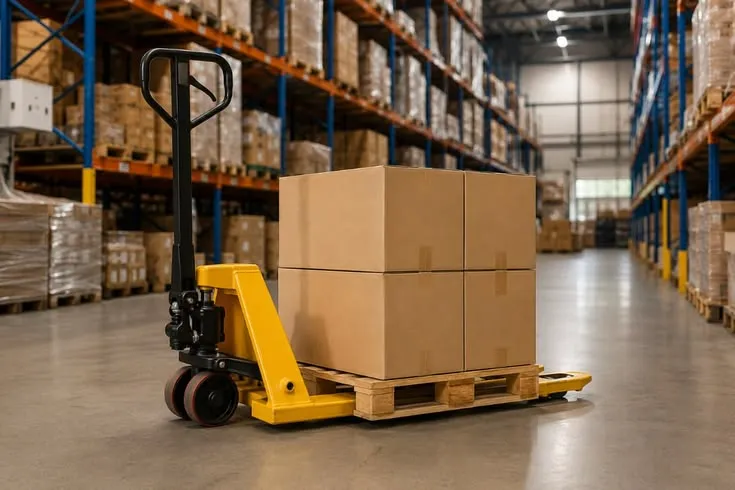
Forklifts usually receive most of the attention when warehouse flooring is specified, but smaller material-handling equipment can create its own demanding wear patterns. Steel-wheeled carts, dollies, and heavily loaded transport equipment concentrate weight onto relatively small contact areas. When these wheels repeatedly cross joints, turn in narrow work zones, or carry dense loads, the floor can experience significant abrasion and impact. Facility managers should therefore include all material-handling equipment, not only forklifts, when planning a warehouse resin flooring system.
Small Wheels Create Concentrated Loads
A large vehicle distributes its weight across several tires. Smaller steel wheels may place a considerable load onto a much narrower contact point.
This concentrated pressure can expose weaknesses in deteriorated concrete, old patches, and damaged joint edges. The floor may appear suitable under normal foot traffic while showing rapid wear once heavily loaded carts repeatedly travel the same routes.
Managers should document cart types, load weights, wheel materials, and travel frequency before requesting a flooring specification.
Joint Crossings Deserve Attention
Concrete joints are particularly vulnerable when hard wheels cross them repeatedly. If an edge is already chipped, each impact can enlarge the defect and create a progressively rougher transition.
Facilities searching to Buy Warehouse Resin Flooring In Nj should therefore evaluate the condition of joints before focusing on the coating itself. Damaged sections may need precision patching or other repair before resin layers are installed.
A new finish cannot make unstable concrete beneath a joint disappear.
Turning Creates Different Wear
Straight travel and turning do not affect a floor in exactly the same way. When carts change direction, hard wheels can create lateral abrasion across the surface.
Packing stations, production cells, staging points, and aisle intersections may therefore wear more quickly than long straight routes. These localized patterns can be missed when a project is designed only around total square footage.
Mapping turning locations helps contractors understand where the floor experiences the greatest mechanical demand.
Debris Can Increase Surface Damage
Small pieces of metal, grit, pallet debris, and hard contaminants may become trapped beneath cart wheels. A steel wheel passing repeatedly over abrasive debris can increase scratching or localized wear.
Good housekeeping therefore contributes to floor life as well as general cleanliness. Smooth, continuous surfaces can make debris easier to remove than heavily deteriorated concrete with cracks and rough patches.
Maintenance teams should pay particular attention to routes where carts frequently transport materials between production, storage, and shipping zones.
Preparation Must Address Existing Weaknesses
Warehouse resin flooring relies on the concrete beneath it. Weak surface material, old coatings, cracks, uneven joints, and previous patches should be evaluated before application.
HPS describes mechanical profiling through methods such as diamond grinding or shot blasting as a key part of industrial preparation.
Businesses comparing an Online Epoxy Floor Installer In Green Brook should therefore look beyond online photographs and ask how the actual slab will be prepared. The installation process matters more than simply selecting a glossy finished appearance.
System Build Should Match Traffic
Not every warehouse requires the same resin thickness or layer structure. A lightly used storage room and a busy logistics area with hard-wheeled equipment face very different operating conditions.
High-solids epoxy systems can provide a substantial build for demanding industrial traffic, while a suitable urethane topcoat can add scratch and abrasion resistance.
The contractor should explain why the proposed system matches the facility rather than simply offering the same coating package for every project.
Inspect Routes Instead of Random Areas
Routine floor inspections become more useful when they follow actual equipment paths. Cart lanes, joint crossings, turning areas, staging zones, and loading interfaces are logical places to examine first.
Managers should look for chips, worn patches, rough joint edges, and areas where the finish changes noticeably compared with adjacent sections.
Photographing the same high-use locations periodically can reveal whether wear is stable or accelerating.
Equipment Choices Also Matter
Flooring is only one side of the maintenance equation. The type and condition of wheels can influence how much stress the surface receives.
Damaged wheels, embedded debris, or unsuitable material-handling equipment may increase impact and abrasion. Periodic equipment inspection can therefore complement flooring maintenance.
When recurring damage occurs along one particular cart route, managers should investigate both the floor and the equipment using it.
Conclusion
Steel-wheeled carts may be smaller than forklifts, but their concentrated loads and hard contact points can make them significant contributors to warehouse floor wear. Joint crossings, sharp turns, debris, and repetitive routes can intensify that stress in predictable locations.
A stronger flooring strategy begins by understanding every type of equipment moving through the facility. Proper concrete preparation, joint repair, an appropriate resin build, focused inspections, and equipment maintenance can work together to create a warehouse floor better matched to real material-handling demands rather than assumptions based only on forklift traffic.

