
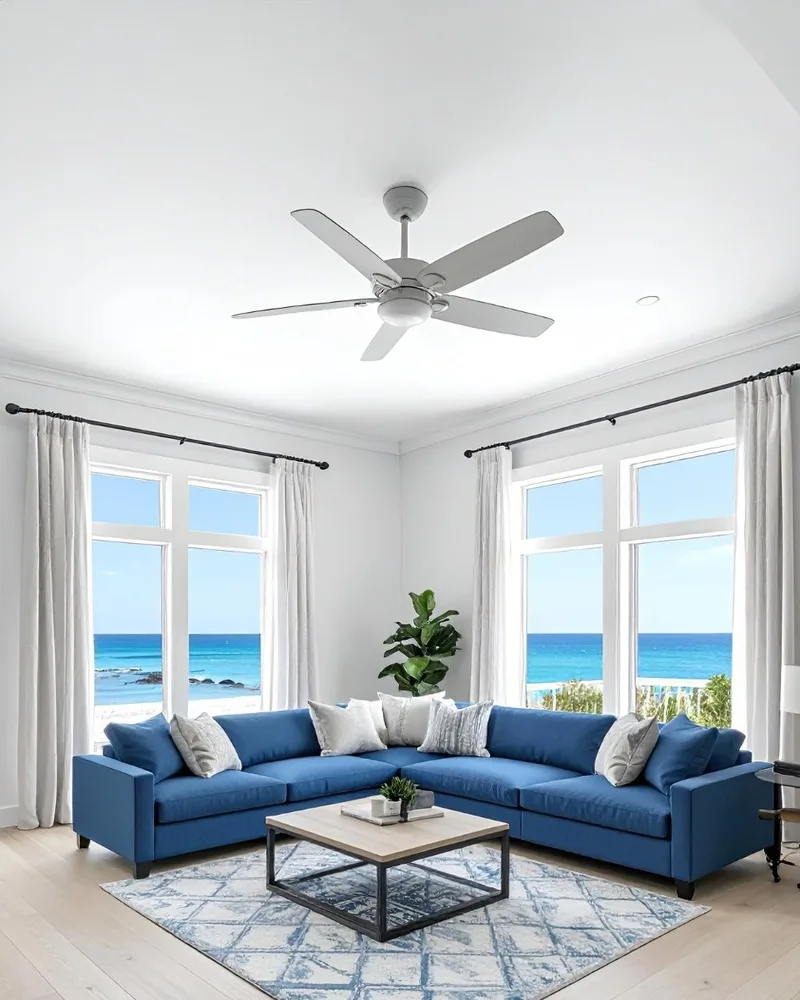
If you have ever walked into a room and felt like the ceiling fan was either doing nothing at all or blowing papers off your desk, there is a good chance the fan size simply does not match the room. This is one of the most common mistakes homeowners make, and it is also one of the easiest to avoid with a little planning before installation day.
Whether you live near Silver Lake, downtown Everett, or just across the city line in Lake Stevens, getting the fan size right makes a real difference in comfort, energy efficiency, and even the look of your room. Below is a practical guide to help you choose a fan that fits your space, along with a few things to keep in mind before scheduling ceiling fan installation in Everett.
Why Fan Size Matters More Than You Think
A ceiling fan that is too small for a room will struggle to move enough air, leaving you reaching for the thermostat more often than you should. On the other hand, a fan that is too large for a small bedroom can feel overpowering, create excessive noise, and even look out of proportion with the rest of the room.
Fan size is typically measured by blade span, which is the diameter of the circle created by the spinning blades. This measurement, combined with the room’s square footage and ceiling height, determines how well the fan will perform. Getting this balance right is the foundation of good airflow, energy savings, and overall comfort throughout the year.
Matching Fan Size to Room Square Footage
A simple way to start is by measuring the square footage of the room where the fan will go. Here is a general guideline that many electricians and HVAC professionals follow:
- Rooms up to 75 sq ft (small bathrooms, breakfast nooks, walk-in closets): 29 to 36 inch blade span
- Rooms 76 to 144 sq ft (bedrooms, home offices, dens): 36 to 42 inch blade span
- Rooms 144 to 225 sq ft (master bedrooms, medium living rooms): 44 to 50 inch blade span
- Rooms larger than 225 sq ft (great rooms, open-concept living and dining areas): 50 to 60 inches or larger, sometimes requiring multiple fans
For Everett homes with open floor plans, especially newer builds near North Everett or Mukilteo, two smaller fans spaced evenly across a large room often work better than a single oversized fan. This setup creates more even airflow distribution and avoids the heavy, top-down feeling that one giant fan can produce in a wide-open space.
Ceiling Height and Downrods
Many homes in older Everett neighborhoods, particularly those built mid-century near Bayside or Riverside, have lower ceilings, often around eight feet. In these cases, a flush-mount or hugger-style fan is usually the better choice, since it sits closer to the ceiling and avoids making the room feel cramped.
For homes with vaulted or higher ceilings, which are common in newer construction around Lake Stevens and parts of Mill Creek bordering Everett, a downrod is essential. A downrod lowers the fan to an optimal height, typically between eight and nine feet from the floor, where airflow is most effective. Without the right downrod length, a fan mounted too close to a high ceiling will barely circulate air at all, no matter how powerful the motor is.
Airflow and CFM Ratings
Beyond physical size, it helps to look at a fan’s CFM rating, which stands for cubic feet per minute. This number tells you how much air the fan moves at its highest speed. A higher CFM rating generally means better air circulation, which is especially useful during the warmer summer stretches Everett occasionally sees, as well as for keeping air moving during our long, damp winters to help reduce moisture buildup and improve indoor air quality.
When comparing fans, look at the CFM rating alongside the blade span rather than relying on size alone. Two fans with the same blade span can have very different airflow performance depending on motor strength, blade pitch, and overall design.
Considering Room Function and Layout
Room size is not the only factor. How you use the space matters too. A bedroom fan might prioritize quiet operation for better sleep, while a kitchen or sunroom fan might prioritize stronger airflow to handle cooking heat or sun exposure. Outdoor-rated fans for covered patios, which are increasingly popular among homeowners in waterfront areas near Lake Stevens, also need to be rated for damp or wet locations depending on how exposed the space is to the elements.
Furniture placement and walkways should factor in as well. Blades should have proper clearance from walls, light fixtures, and tall furniture, generally at least 18 to 24 inches of space on all sides for safe and effective operation.
Why Professional Installation Still Matters
Even with the right size fan picked out, proper installation plays a major role in performance and safety. Ceiling fans are heavier and create more vibration than standard light fixtures, which means the electrical box and mounting bracket need to be rated to support the additional weight and movement. Older homes throughout Everett, especially those with original wiring from decades past, may need an electrical box upgrade before a new fan can be safely installed.
A licensed electrician can also help with balancing larger fans, wiring in remote controls or smart fan switches, and ensuring everything meets current electrical codes for Snohomish County. This is particularly important for homes near Lake Stevens with vaulted ceilings, where working safely at height adds another layer of complexity to the job.
Bringing It All Together
Choosing the right ceiling fan size comes down to a few key measurements: room square footage, ceiling height, and how the space is used day to day. Taking the time to match these factors with the correct blade span, downrod length, and CFM rating will result in a fan that actually does its job, keeping rooms comfortable in every season without looking out of place.
For homeowners across Everett and nearby communities like Lake Stevens, working with a local professional for ceiling fan installation in Everett ensures the fan is sized correctly, mounted securely, and wired safely from the start. A little planning before purchase goes a long way toward years of quiet, efficient comfort in your home.


